There is something different about planning your first trip to Africa.
Perhaps you’ve dreamed about it for years. Maybe it started with stories from a friend, photographs of an African sunset, a lifelong ambition to hunt in the bushveld, or simply the feeling that it’s finally time to experience somewhere completely different.
Then you actually start planning.
When should we go? What do we pack? How do we get there? What will we eat? Is a safari suitable for the whole family? What will my partner do if they don’t hunt? How much of the trip needs to be organised beforehand?
Suddenly, the dream comes with a very long list of questions.
The good news is that an African safari doesn’t need to feel complicated.
At Inkulu Adventures, we welcome guests from around the world to our home in the South African bushveld. Some arrive with decades of safari experience behind them. Others step off the plane for their very first visit to Africa.
If you’re one of the latter, this guide is for you.
First things first: there is no single way to experience Africa
One of the biggest misconceptions about an African safari is that it is a particular kind of holiday.
It isn’t.
Your safari might mean early mornings tracking game through the bush with a Professional Hunter. It might mean slow afternoons beside the waterhole with a drink in your hand. It could include game drives, photography, a spa treatment, evenings around a fire, exceptional food, a few days in Cape Town or an entirely different adventure somewhere else in South Africa.
For most of our guests, it becomes a combination of many of these things.
That’s why we believe the best African safaris aren’t taken from a catalogue. They’re built around the people who are actually travelling.
The first question shouldn’t be, “Which safari package should I choose?”
It should be:
“What would make this an unforgettable trip for us?”
That’s where we start.
When is the best time to visit South Africa for a safari?
There isn’t one perfect month for everybody.
South Africa’s seasons are opposite to those in the Northern Hemisphere. Our summer runs roughly from December to February, while June, July and August are winter.
In the bushveld, winter generally brings cooler mornings and evenings, comfortable daytime temperatures and drier vegetation. These conditions can make wildlife easier to spot and are particularly well suited to spending long days outdoors.
The warmer months bring a completely different character to the bush. Summer rainfall transforms the landscape, vegetation becomes lush and green, and the bush feels wonderfully alive.
Your ideal timing will depend on what you want from your trip.
A hunter may have different priorities from a keen photographer. A family travelling during school holidays has different considerations from a retired couple with completely flexible dates. And if you’re combining your safari with Cape Town, the coast or another part of southern Africa, that may influence your timing too.
Rather than searching for the single “best” month, think about the experience you want to have.
Coming soon: When Is the Best Time for Your South African Safari?
How far in advance should you plan your first African safari?
Earlier than you would plan an ordinary holiday.
Not because travelling to Africa is impossibly complicated, but because a bespoke safari involves moving pieces that are much easier to arrange when there is time to do them properly.
International flights, preferred travel dates, hunting arrangements, family activities, firearm documentation where applicable, dietary requirements and additional destinations can all form part of the planning.
And if this is a trip you’ve been dreaming about for ten years, it seems a shame to compromise because you started organising it ten weeks before departure.
Beginning the conversation well in advance gives us time to understand what you want from your visit and build the experience around you.
How do you get to Inkulu Adventures?
Inkulu Adventures is situated in the South African bushveld in the Thabazimbi region of Limpopo.
For most international visitors, the journey begins with a flight into Johannesburg’s O.R. Tambo International Airport.
From there, the city gradually gives way to open country and, eventually, the unmistakable landscape of the bushveld.
For first-time visitors, this is often the moment when the trip starts feeling real.
The mountains appear. The roads become quieter. The landscape changes.
And somewhere along the way, someone spots their first impala and the entire vehicle suddenly becomes very interested in looking out of the windows.
By the time you reach Inkulu, the airport already feels a world away.
What should you pack for an African safari?
Probably less than you think.
Comfort is far more important in the bush than dressing for dinner every night.
For most safaris, you’ll want comfortable neutral-coloured clothing, practical closed shoes or boots, a hat, sun protection and layers that you can add or remove as temperatures change.
Winter mornings in the bushveld can be surprisingly cold, particularly when you’re travelling in an open vehicle. A warm jacket is worth the luggage space.
By midday, you may wonder why you brought it.
That is Africa.
You also don’t need fourteen completely different safari outfits for a fourteen-day trip. At Inkulu, daily laundry and cleaning services are part of your stay, which makes travelling light considerably easier.
A good pair of binoculars and a camera are worthwhile even if you aren’t coming primarily for wildlife photography. Africa has a habit of presenting you with moments you’ll wish you could see again.
Coming soon: What to Pack for a Luxury South African Safari — and What You Can Leave at Home
What is the accommodation like on a luxury South African safari?
“Safari accommodation” can mean everything from a tent in the wilderness to a five-star lodge.
At Inkulu, returning from the bush doesn’t mean roughing it.
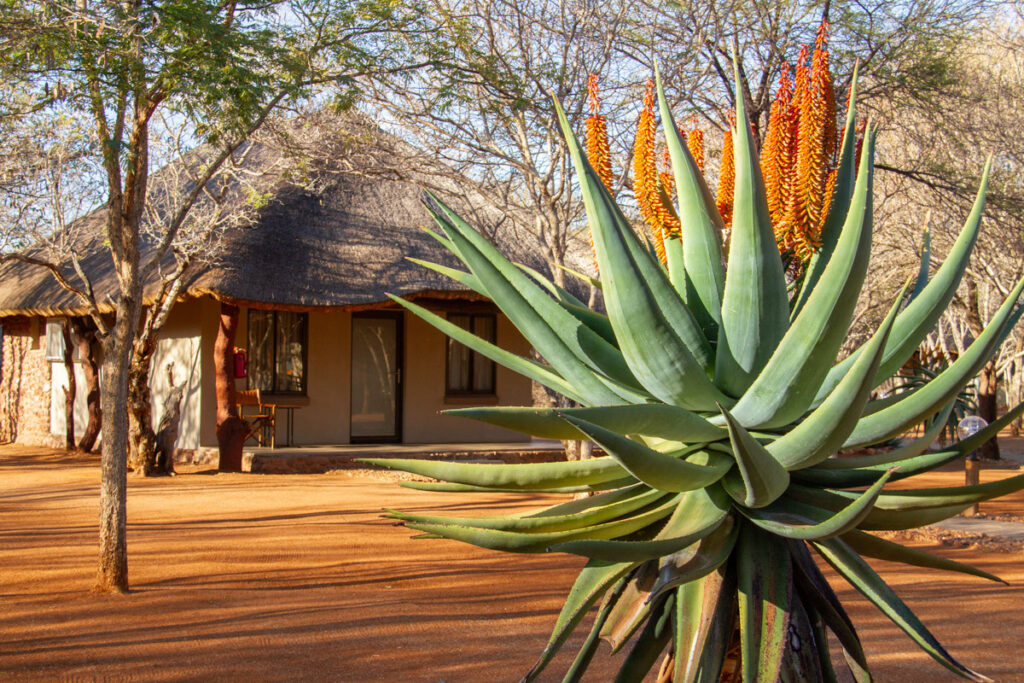
Our lodge offers private, air-conditioned suites, an on-site spa, a waterhole visited by wildlife, a dining room, lounge, Wi-Fi, bar and outdoor boma.
But we don’t believe luxury is simply a list of facilities.
Real luxury is having space.
It’s not needing to watch the clock.
It’s coming back dusty and tired from a day in the bush to find a hot towel and cold drink waiting.
It’s sitting around the fire long after dinner because nobody is rushing you somewhere else.
It’s someone remembering what you like to drink.
And it’s knowing that tomorrow doesn’t need to look exactly like today.
That’s what we mean when we talk about unrushed luxury.
What will you eat?
Very well.
Food is a big part of life at Inkulu.
Meals are fully catered and prepared by our team, and the dining experience ranges from beautifully prepared meals in the lodge to unmistakably African experiences around the fire.
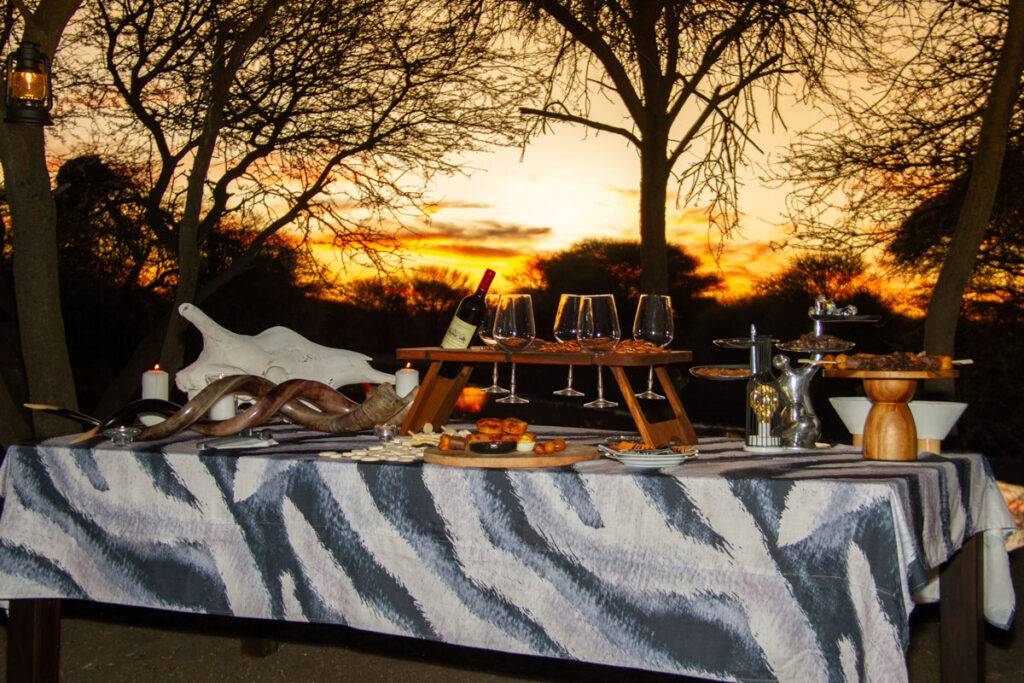
You might find yourself eating traditional dishes, enjoying game prepared in a potjie, or sitting under the stars wondering why food somehow tastes better when you’ve spent the entire day outdoors.
Meals and selected wine, beer, liquor and soft drinks are included as part of a stay at Inkulu.
If you have dietary requirements or preferences, tell us while we’re planning your safari.
Remember: bespoke means your experience.
What does a normal day on safari look like?
This is one of our favourite questions because there isn’t really a normal day.
The bush tends to set its own rhythm.
You may wake early, have coffee while the sky is still changing colour and head out as the bush begins to stir.
If you’re hunting, much of the day may be spent with your Professional Hunter and trackers, reading the landscape and following signs that most of us would walk straight past.
If you aren’t hunting, your day can look entirely different.
Perhaps you want to relax at the lodge, book a treatment at Ubuntu Spa, spend time watching wildlife around the waterhole, head out on a game drive or simply do absolutely nothing for a while.
Later, everyone comes back together.
Drinks appear.
Stories get bigger.
The fire gets lit.
Dinner follows.
And somehow another day in Africa disappears.
Coming soon: What Does a Typical Day on an African Safari Actually Look Like?
Do you have to hunt to stay at Inkulu?
Absolutely not.
Hunting is an important part of Inkulu Adventures and something we’re immensely passionate about, but it doesn’t define every guest’s experience.
Some members of a family may hunt while others don’t.
And this is precisely where a private, personalised safari becomes valuable.
A non-hunting partner shouldn’t have to spend ten days waiting for everybody else to return from the bush.
They are on holiday too.
South Africa offers an extraordinary variety of experiences beyond the hunt, and a safari can be combined with everything from spa treatments and wildlife experiences to hot-air ballooning, Cape Town, the Winelands, Table Mountain and the South African coast.
If one person has dreamed about hunting Africa for years, that doesn’t mean everyone else has to inherit their itinerary.
We’d rather create a trip the whole family talks about for years afterwards.
Coming soon: What Can a Non-Hunting Partner Do on an African Safari?
Can you bring children on an African safari?
For the right family, Africa can be extraordinary.
Children experience the bush differently from adults.
An adult may admire a spectacular landscape.
A child wants to know what made that footprint.
An adult appreciates a quiet waterhole.
A child has already spotted something moving in the grass.
Safari can turn nature into something tangible and exciting in a way that no documentary can quite reproduce.
Inkulu itself was created by a family. Ruan, Marlise and their two girls are at the heart of the business, and that family character has become part of the way guests experience the lodge.
It is also something our returning guests regularly mention: they don’t simply feel as though they’ve stayed at a lodge. They feel they’ve returned to people they know.
If you’re travelling with children or teenagers, tell us their ages, interests and what your family enjoys doing. That information is much more useful to us than simply knowing how many beds you need.
Coming soon: Can You Bring Your Family on an African Hunting Safari?
What if this is a hunting safari?
If hunting is part of your African dream, your planning will include a few additional considerations.
You’ll talk to us about the type of hunting experience you’re looking for, your priorities, your level of experience and whether you’re bringing your own firearm or would prefer to hire one locally.
At Inkulu, hunters are accompanied by licensed Professional Hunters as well as experienced trackers and skinners, with fully outfitted hunting vehicles available during the safari.
But don’t feel as though you need to arrive knowing everything about hunting in Africa.
That’s why you have a professional team.
Ask questions.
Tell us what you’ve hunted before.
Tell us what you’ve never done.
Tell us what you’ve dreamed of doing since you were a kid.
A great Professional Hunter isn’t simply there to locate an animal. They help you understand the bush, make responsible decisions, stay safe and experience African hunting properly.
And if you’re bringing your own rifle internationally, we’ll help you understand what needs to be arranged before you travel.
What happens when you’re not hunting or game viewing?
You slow down.
This might be one of the most underestimated parts of safari.
There is a peculiar temptation when travelling internationally to fill every hour with something.
Africa is very good at curing that.
At Inkulu, you can retreat to Ubuntu Spa, sit outside surrounded by the bushveld, watch animals coming to the waterhole, enjoy the lodge or simply spend an afternoon doing very little at all.
Sometimes the moments guests remember most aren’t scheduled activities.
They’re conversations around the fire.
A spectacular sunset nobody expected.
An animal appearing at the waterhole while you’re having a drink.
Or the first completely quiet afternoon you’ve had in years.
Leave some room in your itinerary for those.
Can you combine your safari with the rest of South Africa?
You absolutely should consider it.
South Africa is remarkably diverse, and one of the advantages of travelling here is how many completely different experiences can fit into a single journey.
After the bushveld, you could fly to Cape Town.
Visit vineyards.
See the Atlantic Ocean from the top of Table Mountain.
Drive Chapman’s Peak.
Spend time on the coast.
Add another wildlife destination.
Or make the safari one chapter in a longer journey through southern Africa.
Inkulu can help guests explore experiences beyond the lodge and incorporate them into a broader African adventure.
For many first-time visitors, this turns a safari into something much bigger:
their first real introduction to Africa.
Is an African safari safe?
It’s completely reasonable to ask this, particularly if you’ve never travelled to South Africa before.
Like any international destination, South Africa requires sensible travel planning and awareness. Conditions also differ enormously between major cities, rural areas and private safari destinations, so broad statements about “safety in Africa” aren’t particularly useful.
The simplest advice is to discuss your itinerary with the people arranging your trip.
We can help you understand your journey, transfers and destination before you arrive so that you aren’t trying to work everything out for the first time after a long international flight.
For current health requirements, travel advisories, visas and entry requirements, always check the latest official guidance applicable to your nationality before travelling.
Will I have Wi-Fi and phone signal?
Yes, you don’t have to disappear completely unless you’d like to.
Inkulu’s lodge includes Wi-Fi, so you can stay in contact with home when you need to.
That said, we recommend occasionally forgetting that it exists.
There aren’t many places left where watching the sun set is genuinely more interesting than checking your phone.
Africa is one of them.
Do I need to understand Afrikaans?
No.
English is widely spoken in South Africa and you’ll be perfectly comfortable communicating throughout your stay.
But you may go home with a few new words.
Braai is one you’ll encounter quickly. Calling it a barbecue will technically get the point across, although South Africans will insist there is a difference.
Boma is another.
And by the time you leave, somebody will probably have taught you lekker.
You’ll understand when you get here.
How much should I plan — and how much should I leave open?
Plan the important things.
Leave room for Africa.
International flights, transfers, important activities, hunting arrangements and major extensions to your trip should obviously be organised ahead of time.
But don’t schedule every hour.
Weather changes.
Wildlife doesn’t read itineraries.
People get tired.
Someone discovers that what they really want is another afternoon at the lodge.
A personalised safari gives you the freedom to respond to those moments rather than feeling trapped by a programme created six months earlier.
What makes a first African safari unforgettable?
It probably won’t be what you expect.
Of course you’ll remember seeing African wildlife in the bush for the first time.
Hunters will remember particular stalks and encounters for the rest of their lives.
You’ll remember extraordinary landscapes and meals and sunsets.
But after welcoming guests from around the world, we’ve noticed something.
People talk just as much about people.
The guide who made them laugh.
The tracker who showed them something they’d never have noticed.
The person who knew their coffee order by the second morning.
The dinner that turned into hours around the fire.
The friendship that didn’t end when the safari did.
Inkulu Adventures was created by our family because we wanted to share the Africa we love with people from around the world. Our guests have come from thousands of miles away and, many times, returned again.
That is what we want your first safari to feel like.
Not a tour.
Not a transaction.
Not a list of animals you saw or places you visited.
Your own story of Africa.
Ready to start planning your first African safari?
You don’t need to have everything figured out before you contact us.
In fact, we’d prefer that you didn’t.
Tell us who’s travelling.
Tell us when you’re thinking of coming.
Tell us whether hunting is part of the adventure.
Tell us what your family loves, what you’ve always wanted to see, and what would make you fly home thinking:
“That was the trip of a lifetime.”
We’ll take it from there.
Experience the real Afrika with Inkulu Adventures.