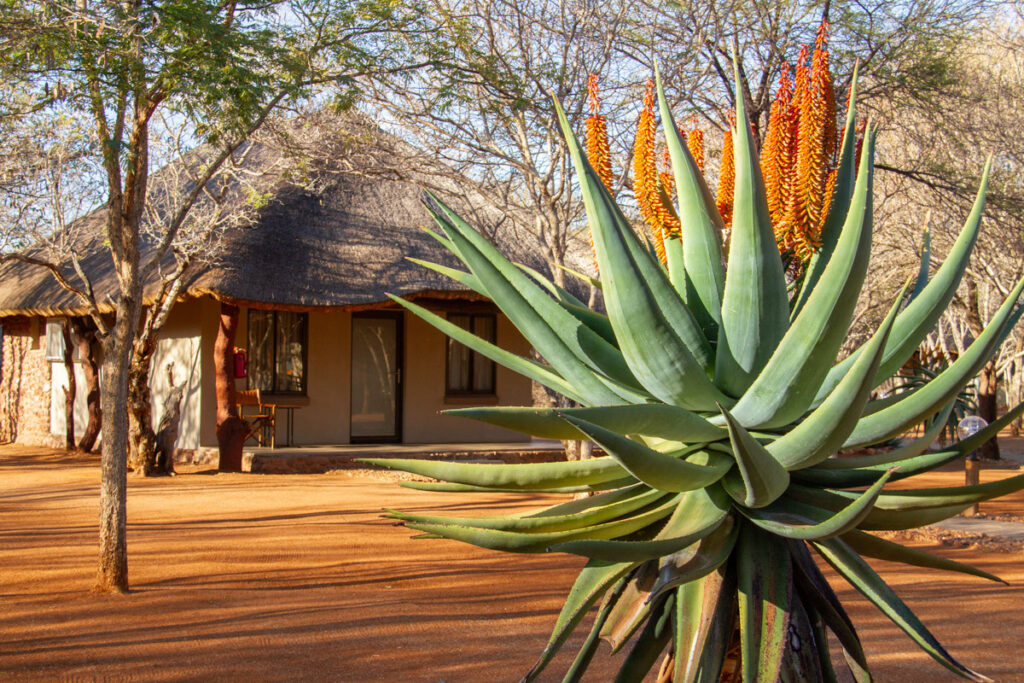
You wake before the alarm.
For a moment, you have absolutely no idea where you are.
Then you hear it.
Something outside.
A bird you don’t recognise. Another sound further away. The faint beginnings of movement somewhere beyond your room.
And you remember.
You’re in Africa.
One of the questions first-time safari travellers often ask is what actually happens once they arrive.
Is every minute scheduled?
Are you out looking for wildlife from dawn until dusk?
What time do you eat?
What happens in the afternoon?
And when exactly do those drinks around the fire from all the photographs happen?
The answer is that no two days at Inkulu Adventures need to look exactly the same.
That’s part of the point.
But if you’re wondering what a day in the South African bushveld might feel like, come spend one with us.
06:00 | The bush wakes up before you do
Safari mornings start early.
Not because we have a particular enthusiasm for alarm clocks, but because the first hours of the day are special in the bush.
The air is cool.
The light is soft.
Wildlife is beginning to move.
And the heat of the day is still somewhere in the future.
Exactly how early you start will depend on the season and what you’re doing that day.
In winter, getting out of bed may require a brief internal negotiation.
Remember our advice about packing warm layers for a South African safari?
This is why.
You pull on a jacket.
Step outside.
And suddenly the cold doesn’t seem quite as important anymore.
06:30 | Coffee first. Africa second.
There are limits to how adventurous one needs to be before caffeine.
An early coffee or something warm before heading out gives everybody a chance to wake up properly. Use the personal coffee machine in your room for a cup of coffee on your own veranda, or wander into the waiting lodge where coffee is already brewing.
There’s often a quiet anticipation at this point in the morning.
The day hasn’t happened yet.
You don’t know what you’ll see.
You don’t know where you’ll end up.
And unlike so much of modern travel, you can’t simply look up the answer.
The bush doesn’t publish its schedule.
06:30 | Into the bush
Then you’re off.
For some guests, that means heading out to experience the wildlife.
For hunters, it may mean beginning the day with a Professional Hunter and trackers.
For photographers, the early light alone is reason enough to be outside.
The temperature changes.
The landscape changes.
Tracks tell you what moved through during the night.
And slowly, you begin noticing things you would have driven straight past on your first morning.
A movement in the grass.
A shape between trees.
A track on the road.
A bird call someone identifies before you’ve even worked out where the bird is.
Safari teaches you to look differently.
There is no guarantee of what happens next
This is one of the most important things to understand about a real safari.
There is no script.
You might spend an hour searching for something that never appears.
Then turn a corner and encounter something nobody expected.
You might stop for an animal you thought you were desperate to see and discover that the smaller things are just as fascinating once someone teaches you what you’re looking at.
If you’re hunting, the same principle applies even more strongly.
Wild animals don’t care about your itinerary.
Tracking takes however long tracking takes.
Conditions change.
Plans change.
Sometimes patience is rewarded.
Sometimes it isn’t.
That’s not a failure of the safari.
That IS the safari.
09:30 | Breakfast tastes better after you’ve earned it
Eventually, the morning leads back towards the lodge.
And now breakfast feels important.
Really important.
There is something about several hours of cool air, dust, walking, driving and concentration that turns breakfast into an event.
Everyone starts talking.
What did you see?
What happened?
Where did you go?
Someone tells a story.
Someone interrupts because their version is apparently more accurate.
Coffee appears again.
Nobody is particularly interested in rushing.
This is where the pace of a private safari begins to make sense.
You don’t need to finish because another group is waiting for your table.
You have somewhere to be.
You’re already there.
11:00 | Now what?
This might be our favourite question.
Because the answer can be:
Whatever makes sense today.
Perhaps you’re heading back into the bush.
Perhaps you’re hunting and the morning’s tracks have given you a plan.
Perhaps you’d like some time at Ubuntu Spa.
Maybe you want to sit beside the waterhole.
Read.
Take photographs.
Catch up with family at home.
Have a steam, or a couples massage, a facial, or chill in the bush spa hot tub.
Or have absolutely no plans until lunch.
Not every hour of a safari needs to become an activity.
Sometimes the thing international travellers need most is something they forgot they were allowed to have.
Time.
What are non-hunters doing while hunters are in the field?
Potentially something completely different.
One person might leave early with their Professional Hunter while their partner sleeps for another hour (we have blockout curtains for good reason).
They might have breakfast later, enjoy Ubuntu Spa, spend time around the lodge, go wildlife viewing or simply enjoy a slow morning.
If children are travelling with you, their day may follow yet another rhythm.
That’s why we don’t think of the non-hunting partner as somebody who is “waiting behind.”
As we explain in our guide to what a non-hunting partner can do on an African safari, they’re having their own holiday.
You’ll all find each other again later.
And you’ll have different stories to tell.
13:00 | Lunch and the very serious business of doing nothing afterwards
By lunchtime, the African day has settled into itself.
The temperature is warmer.
The urgency of the early morning has disappeared.
Lunch is a chance to come together again, eat properly and work out whether anyone has strong feelings about what happens next.
Often, nobody does.
This is an excellent outcome.
There is a particular luxury in finishing lunch and knowing that you don’t immediately have to go somewhere.
Perhaps you sit for another coffee.
Perhaps a conversation stretches.
Perhaps you return to your room.
Perhaps the idea of an afternoon nap suddenly seems like the finest decision you’ve ever made.
Safari should have space in it. And for the avid hunter, that space can be filled with even more time in the bush!
15:00 | The bush begins calling again
As the afternoon starts cooling, attention turns back outside.
Maybe you’re heading out on another drive.
Maybe a hunt continues.
Maybe there’s somewhere you’d like to return to.
Or perhaps something completely unexpected this morning has changed the afternoon plan.
This is where a private safari rather than a fixed group safari makes such a difference.
The day can respond to what actually happened.
Not what somebody typed into an itinerary six months ago.
16:30 | The light changes
There is a point in the African afternoon when everything begins to soften.
The harshness disappears from the light.
Shadows stretch.
The temperature becomes comfortable again.
Colours deepen.
Photographers suddenly become very interested in everything.
And the bush seems to change mood.
If you’re out wildlife viewing, these later hours can be wonderful.
If you’re hunting, there is often renewed focus as the day cools.
If you’re simply sitting somewhere beautiful, that’s entirely acceptable too.
Not every spectacular African moment needs an objective.
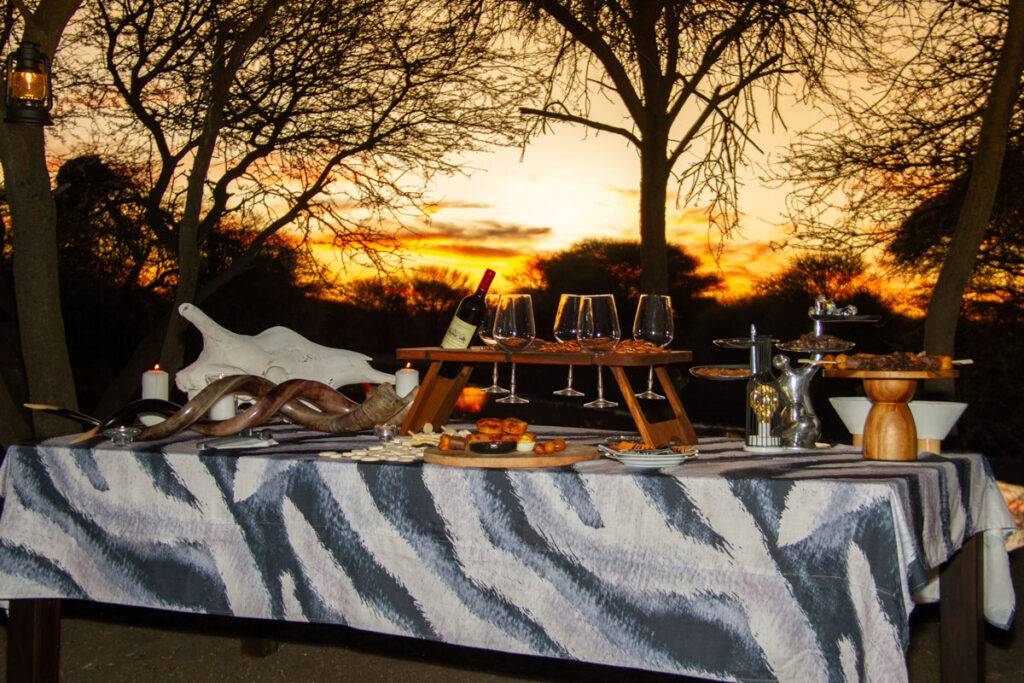
18:00 | Sundowners
There are practical explanations for the tradition of a sundowner.
We are not particularly interested in them.
The important part is this:
The sun is going down.
You’re somewhere in Africa.
Someone hands you a drink.
And for a while, nobody needs anything from you.
Perhaps you’ve had an extraordinary day.
Perhaps the thing you were hoping to find remained stubbornly somewhere else.
Perhaps the children have somehow accumulated dust on parts of themselves you didn’t realise were exposed.
It doesn’t matter.
You stop.
You watch the sky.
And you let the day end properly.
19:00 | Coming home
Eventually, you return to Inkulu Adventures.
If you’ve spent the day in the field, this is when the other half of the experience becomes particularly welcome.
A hot towel.
A drink.
A shower.
Clean clothing.
Your room.
People asking how your day went because they genuinely want to hear the answer.
This is the part of safari luxury that’s difficult to communicate in a facilities list.
It’s not simply what is waiting for you.
It’s the feeling of coming back.
After only a few days, you may catch yourself saying:
“Let’s go home.”
And by home, you mean Inkulu Adventures.
20:00 | Dinner becomes part of the story
Dinner isn’t simply the meal at the end of the day.
It’s where the day gets reconstructed.
The hunter tells everyone what happened.
Someone else talks about what they saw.
The children have a story.
The Professional Hunter adds the detail somebody conveniently omitted.
There is food.
There is wine.
There is laughter.
And because tomorrow isn’t being run by a tour bus timetable, nobody needs to stare nervously at the clock.
This is why meals matter so much at Inkulu Adventures.
Hospitality isn’t what happens between safari activities.
Hospitality is part of the safari.
21:30 | The fire
Eventually, people find their way towards the fire.
This is where time becomes unreliable.
Someone says they’ll have one drink.
Nobody believes them.
Stories appear.
Some are from today.
Some are from safaris twenty years ago.
Some improve noticeably each time they’re told.
Above you is an African night sky that doesn’t look quite like the one at home.
Around you are people who may have been strangers several days ago.
And suddenly you understand why repeat safari guests struggle to explain what keeps bringing them back.
It isn’t only wildlife.
It isn’t only hunting.
It isn’t only luxury.
It’s this.
Tomorrow will be different
Perhaps tomorrow starts later.
Maybe you’re hunting all day.
Perhaps you’re going somewhere else.
Maybe the family has planned an activity together.
Maybe somebody wants another morning at Ubuntu Spa.
Maybe today changed what you thought you wanted from tomorrow.
Good.
A safari should have a rhythm.
It should not have a stopwatch.
What does a hunting day look like?
For hunters, the shape of the day can change considerably depending on the species, conditions and how the hunt unfolds.
Some days involve long, tough hours in the field.
Some involve considerable walking.
Some require patience.
Some become unforgettable very quickly.
Your Professional Hunter and tracking team will guide the day’s approach according to the circumstances.
And because you’re staying on a bespoke safari rather than following a generic daily programme, the rest of your travelling party doesn’t have to mirror that schedule.
This is particularly valuable when you’re bringing your family on an African hunting safari.
The hunt can be taken seriously without requiring everyone else’s holiday to revolve around it.
What does a family safari day look like?
Potentially much less structured.
Children aren’t small adults.
They get tired.
They get hungry at inconvenient times.
They become intensely interested in things nobody anticipated.
And sometimes they have absolutely no interest in the activity adults were convinced they’d love.
That’s fine.
A family safari should be allowed to flex.
One morning might be full of activity.
The next might start slowly.
Parents might split up for different experiences and meet again later.
The goal isn’t to complete a safari checklist.
It’s to have a brilliant family holiday in Africa.
Do you have to wake up before sunrise every day?
No.
We promise there is no safari police.
Early mornings can be extraordinary and often make sense for wildlife viewing and hunting.
But this is your holiday.
If what you desperately need one morning is sleep, sleep.
If the family wants a slow breakfast, have one.
If yesterday was long and nobody is enthusiastic about a 05:30 alarm, we can talk about today.
This is one of the reasons we believe so strongly in private, bespoke travel.
Your safari should serve your experience, not the other way around.
The real luxury is the rhythm
Before visiting Africa, luxury can sound like a list.
Beautiful accommodation.
Excellent food.
Good wine.
A spa.
Personal service.
And yes, those things matter.
But after a few days in the bush, luxury begins to feel different.
It’s waking when the bush is waking.
Having coffee without checking your inbox.
Spending hours concentrating on something completely unrelated to normal life.
Eating when you’re hungry.
Resting when you’re tired.
Sitting around a fire because nobody has somewhere else to be.
Having tomorrow planned just enough.
At Inkulu Adventures, that’s the rhythm we’re trying to create.
So, what does a typical day on safari look like?
It starts early.
Except when it doesn’t.
It involves the bush.
Except when you decide to spend the afternoon at the lodge.
There will probably be wildlife.
There will definitely be food.
There may be hunting.
There may be a spa treatment.
There may be children.
There will almost certainly be dust.
Plans may change.
Dinner may run late.
Someone will tell a story around the fire.
And tomorrow will not be exactly the same.
That’s a typical day.
Come and find your own rhythm
If you’re planning your first African safari, don’t worry too much about filling every day before you arrive.
Tell us what matters to you.
Tell us who’s travelling.
Tell us whether you’re hunting, exploring, bringing your family or simply looking for somewhere extraordinary to disappear to for a while.
We’ll take care of the structure.
Africa can take care of the rest.