| Season | Months | Bushveld feel | Great for |
| ☀️ Summer | Dec–Feb | Green, warm, lush | Scenery, birdlife, summer travel |
| 🍂 Autumn | Mar–May | Cooling, transitional | Comfortable weather, mixed itineraries |
| ❄️ Winter | Jun–Aug | Dry, cooler, open | Wildlife viewing, hunting |
| 🌱 Spring | Sep–Nov | Warming, changing | Transitional conditions |
Ask when the best time is to visit South Africa for safari and you’ll often get a surprisingly confident answer:
Winter.
It’s cooler. The vegetation is generally thinner. Wildlife can be easier to spot around available water.
All true.
But it is not the whole answer.
Because the best time for your African safari depends on what you actually want from it. A hunter may choose differently from a photographer. A family travelling during school holidays has different priorities from a couple combining safari with Cape Town.
Someone who loves lush landscapes may prefer a completely different season from someone dreaming about crisp mornings around a fire.
So rather than giving you one “best” month, let’s look at what a South African safari actually feels like throughout the year.
First, remember: South Africa is in the Southern Hemisphere
It sounds obvious, but it catches international visitors out surprisingly often.
Our seasons are opposite to those in North America and Europe.
Summer: December to February
Autumn: March to May
Winter: June to August
Spring: September to November
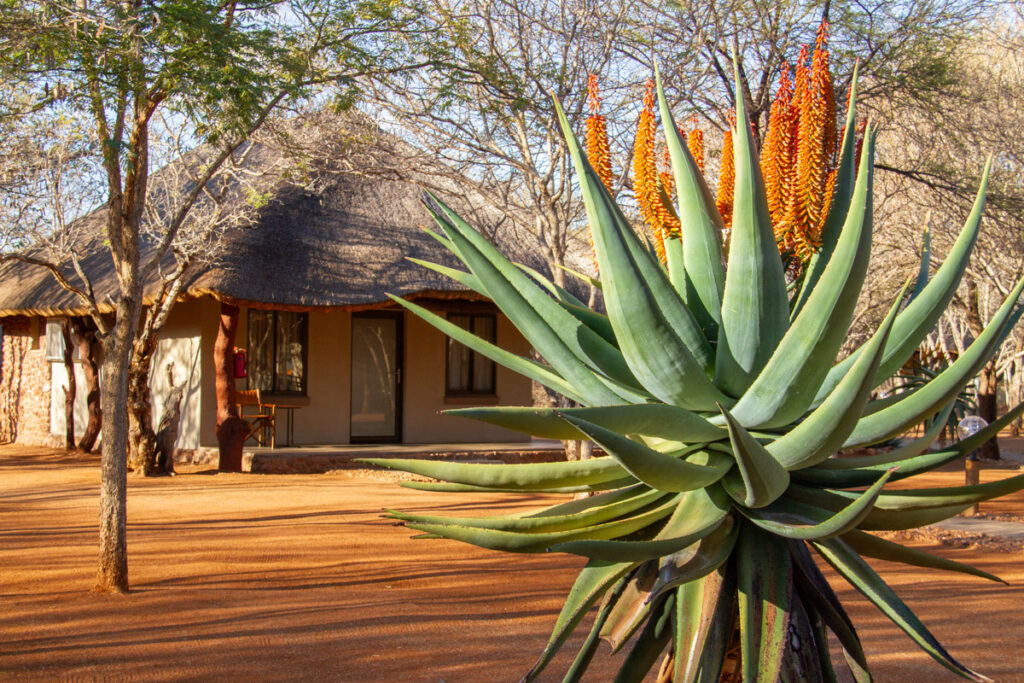
Inkulu Adventures is situated in the bushveld of Limpopo Province in northern South Africa.
Here, summer is generally warm, green and associated with the rainy season, while winter brings cooler, drier conditions.
And the difference between the seasons can completely transform the landscape.
December to February: Green, warm and alive
South African summer brings the bushveld to life.
Rain transforms the landscape.
Vegetation becomes lush and green, summer storms can roll across the bush, and the entire environment feels vibrant.
This can be a beautiful time for travellers who want to see Africa at its greenest.
It is also generally warmer — sometimes considerably so — particularly during the middle of the day.
Early mornings and later afternoons therefore become particularly pleasant times to be outside.
Summer may suit you if:
- You love lush, green landscapes
- Birdlife is a major interest
- You don’t mind warmer weather
- You’re travelling during the December holiday period
- You enjoy dramatic summer skies and photography
The trade-off is that thicker vegetation can sometimes make wildlife more challenging to spot than during the dry winter months.
But “more challenging” doesn’t mean “nothing to see.”
Safari isn’t a zoo.
Part of the magic is looking.
March to May: A beautiful transition
Autumn is one of those periods that doesn’t always receive the attention it deserves.
The intense heat of summer begins to ease.
The landscape can retain much of its greenery earlier in the season while gradually becoming drier as winter approaches.
Mornings become cooler.
Days can be wonderfully comfortable.
And the bush begins changing character.
For travellers who dislike extremes, autumn can offer a particularly attractive balance.
Consider autumn if:
- You prefer moderate temperatures
- You want to avoid the peak heat of midsummer
- You still enjoy some green in the landscape
- You like quieter transitional seasons
- You’re combining several different South African experiences
It can also be an excellent time to begin a longer South African journey because conditions in different parts of the country vary enormously.
Which brings us to an important point.
There isn’t one South African climate
South Africa is a big country.
Really big.
And Cape Town does not have the same seasonal pattern as Limpopo.
That matters if you’re planning to combine your safari with other parts of the country.
The northern bushveld generally receives most of its rainfall during summer.
Cape Town, meanwhile, has a Mediterranean-style climate with wetter winters and dry summers.
So the “perfect” time for a bush safari may not necessarily produce the “perfect” weather for four days beside the Atlantic.
This doesn’t mean you can’t combine them.
You absolutely can.
It simply means your itinerary should be planned around the whole trip, rather than choosing a safari month in isolation.
June to August: The classic dry-season safari
This is the season many people imagine when they think of safari.
Winter in the Limpopo bushveld is typically dry.
Vegetation becomes less dense.
Water becomes more concentrated.
And wildlife visibility can improve.
Days can be beautifully comfortable, particularly when the sun is out.
But there is something first-time visitors regularly underestimate:
African winter mornings can be cold.
Very cold when you’re sitting still in an open vehicle before sunrise.
This is not the permanently scorching Africa of movie stereotypes.
You may leave your room bundled in layers and wonder why nobody warned you.
Then, several hours later, you’ll be taking those layers off.
Winter is particularly appealing if:
- Wildlife viewing is a major priority
- You’re planning a hunting safari
- You prefer dry conditions
- You dislike extreme heat
- You love crisp mornings and evenings around a fire
- You want the classic dry bushveld atmosphere
For many Inkulu Adventures guests, this is an exceptional time to visit.
But pack a jacket.
Seriously.
September to November: Spring and the return of the heat
Spring brings another transition.
Temperatures begin rising.
The bush waits for the summer rains.
Early spring can still retain some of the dry-season characteristics that make winter popular for wildlife viewing.
As the season progresses, the landscape begins changing again.
Then the rain arrives and everything seems capable of turning green almost overnight.
Spring can be a good choice if:
- You want warmer conditions than midwinter
- You enjoy transitional landscapes
- You prefer travelling before the December holiday season
- You want a mixture of dry-season and early-summer characteristics
As with autumn, the exact experience can vary depending on when the seasonal rains arrive.
Africa doesn’t read tourism brochures.
Weather will always have the final say.
So, what is the best month for wildlife viewing?
If your primary goal is traditional game viewing in the northern South African bushveld, the dry winter period and surrounding months are often favoured because vegetation is thinner and animals may be easier to locate around water sources.
But don’t make the mistake of assuming that this means wildlife somehow disappears in summer.
It doesn’t.
The experience simply changes.
Summer gives you greenery, dramatic skies, abundant birdlife and a landscape transformed by rain.
Winter gives you openness, dryness, crisp air and often easier visibility.
One isn’t “real Africa” and the other isn’t.
They’re simply different versions of the same place.
What is the best time for a hunting safari?
Hunting introduces additional considerations.
Species, hunting method, conditions and your broader travel plans all matter.
Cooler, drier months are particularly popular because conditions in the field can be more comfortable and the bush is generally less dense.
But this is exactly the sort of question worth discussing with your outfitter rather than choosing dates purely from an online calendar.
If hunting is one part of a larger family African safari, the best dates should also work for the people who aren’t hunting.
Your hunting calendar shouldn’t accidentally become everybody else’s holiday calendar.
What is the best time for a family safari?
This one is less about weather than people expect.
School calendars may determine your options before climate does.
And that’s fine.
A brilliant family safari does not require you to discover the one magical week when weather, wildlife and school holidays align perfectly.
Instead, think about the ages of your children.
How well do they cope with heat?
Will early winter mornings be difficult?
Do you want to combine the safari with another destination?
How long are you travelling?
What activities interest the family?
A private safari becomes particularly valuable here because your daily routine can adapt to your family rather than forcing everyone into a fixed schedule.
What about Cape Town?
If Cape Town is on your bucket list — and for many international visitors it absolutely should be — factor it into your timing.
Cape Town’s warm, dry summer weather makes the period around the South African summer particularly appealing for beaches, outdoor dining, the Winelands and coastal experiences.
Winter can bring cooler temperatures and more rain.
But Cape Town remains a year-round destination, and winter has its own character.
The key is deciding what matters most.
If the safari is the heart of your journey, choose your dates around the bush and accept whatever Cape Town gives you.
If you’re dreaming equally about safari, beaches and long summer evenings in the Cape, your priorities may shift.
This is why we prefer planning journeys, not isolated bookings.
What should you pack for each season?
Regardless of when you travel, layers are your friend.
For winter, bring genuinely warm clothing for early mornings and evenings.
For summer, lightweight breathable clothing is essential, along with sun protection.
Neutral, practical clothing works well in the bush.
Comfortable shoes matter far more than fashionable ones.
And don’t assume you need to bring enough clothing for every day of your trip; daily laundry at Inkulu Adventures makes packing considerably easier.
We’ll cover this properly in our next guide:
What to Pack for a Luxury South African Safari — and What to Leave at Home.
Is there a bad time to visit South Africa?
Not really.
There are times better suited to specific interests.
There are hotter months.
Cooler months.
Wetter months.
Drier months.
Busier travel periods.
But South Africa doesn’t suddenly stop being worth visiting because the calendar changed.
The better question is:
What kind of Africa do you want to experience?
Green and dramatic?
Dry and golden?
Cool mornings?
Warm evenings?
Wildlife viewing?
Hunting?
Family time?
Cape Town afterwards?
Once you know that, choosing your season becomes much easier.
How far in advance should you choose your dates?
For a major international safari, earlier is generally better, particularly if you have limited travel dates, are travelling as a family or want to combine several destinations.
Flights are only one part of the equation.
Your preferred accommodation, hunting arrangements, transfers and extensions may all need to fit together.
If this is your first African safari, start the conversation before you feel like you need to have everything figured out.
You don’t.
Knowing roughly when you want to travel and who is coming is enough to begin.
The best time is the time that suits your Africa
There is a temptation when planning a once-in-a-lifetime trip to optimise everything.
The perfect month.
The perfect weather.
The perfect itinerary.
The perfect wildlife sightings.
But Africa doesn’t work like that.
And we’re glad it doesn’t.
The unexpected afternoon storm.
The animal nobody was looking for.
The cold morning that ends beside a fire.
The plan that changes because everyone is having too good a time to leave.
Those moments are often what you remember.
So don’t begin by asking:
“What is the best month to visit Africa?”
Begin with:
“What do we want our Africa to feel like?”
Then choose the season that brings you closest.
Let’s find your time for Africa
Tell us when you’re thinking of travelling, who’s coming and what you’d most like to experience.
We’ll help you work out which time of year makes sense for the safari you’re imagining and how the rest of South Africa might fit around it.